
Car Jam
BLANKZONET PTE. LTD.Puzzle
4.73.42K Reviews
- Version
- 1.0412
- Installs
- 10.00M
- Age Rating
- Everyone
Screenshots
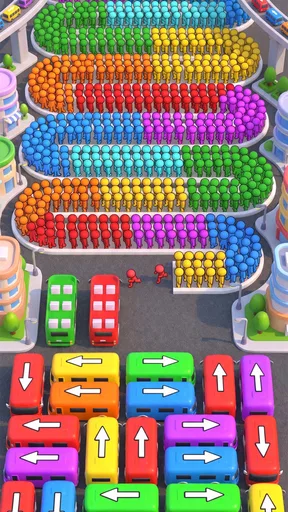
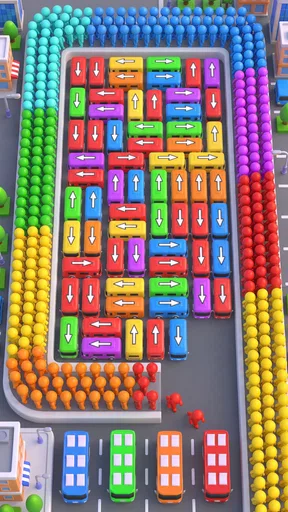
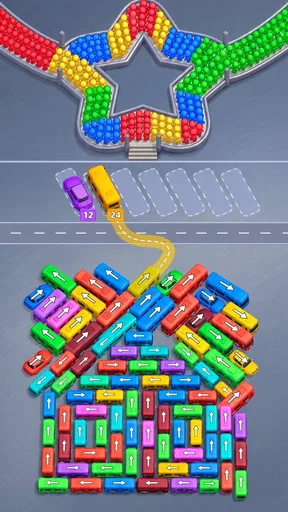
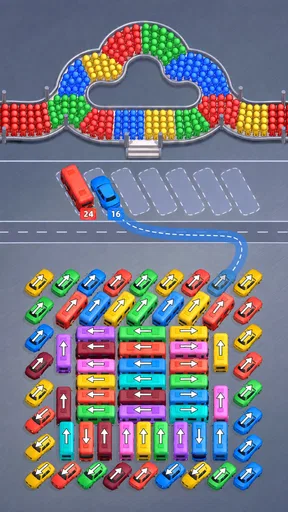
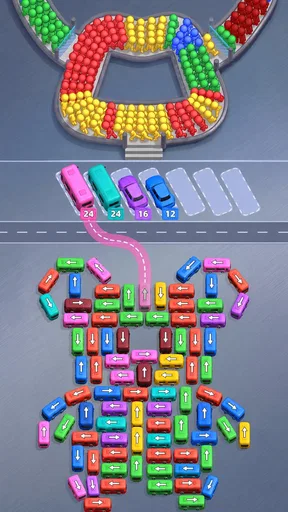
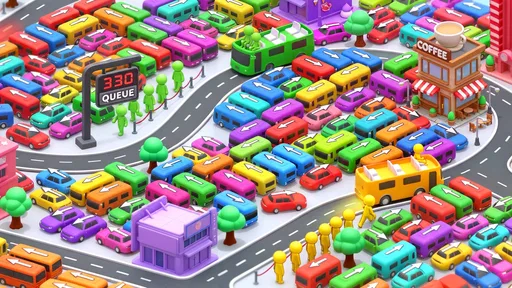
Our Review of Car Jam
 Analysis by Appyee
I spent time with Car Jam as a casual puzzle game built around crowded roads, parked vehicles, and passengers waiting for the right ride. Its central idea is easy to understand: clear the traffic, match people with suitable buses, and make careful parking decisions before the board becomes impossible to manage. That simplicity is exactly what makes it approachable, but the game also depends on how well you plan several moves ahead rather than tapping whatever looks available.
At first glance, this is the kind of game I can recommend for short breaks. A level can be understood quickly, the visual objective is clear, and the puzzle format does not require a long tutorial or a complicated story. I found it most comfortable when I wanted something active enough to hold my attention but light enough to play without remembering a large set of rules. It is free to download, aimed at Everyone, and works on devices running Android 6.0 or later.
The game is developed by BLANKZONET PTE. LTD. and sits in the puzzle category. Its popularity is easy to understand: it has passed 10 million installs and holds a 4.7 average from roughly 347 thousand ratings. Those figures do not automatically make every level enjoyable, but they do suggest that the basic combination of traffic clearing, passenger matching, and parking decisions has found a broad audience.
How the early goals teach the real puzzle
The opening experience works because the goal is visible before the solution is obvious. I can usually see vehicles blocking one another, passengers waiting in groups, and spaces that need to be opened in a sensible order. The first instinct is to move the most convenient car, but the better habit is to ask what that move makes possible afterward. That small shift turns the game from simple tapping into a planning exercise.
Early levels are useful for learning the rhythm of a board. I began by checking which vehicle could leave without creating a new obstruction, then looked for the passenger group that would benefit from that opening. This is more reliable than focusing only on the nearest match. A move that solves one immediate problem can easily make the next few moves harder if it fills a useful lane or leaves a vehicle in an awkward position.
The passenger-matching element gives each board a second layer. Clearing a car is not always the same as making progress. I had to think about whether the available ride served the people currently waiting and whether using it too early would remove a useful option. That is a good early lesson because it prevents the game from becoming a purely visual traffic puzzle. The board asks me to manage both space and order.
Another helpful habit is to pause briefly before making the first move. Because the layouts are compact and the objective is straightforward, it is tempting to act immediately. I got better results by scanning the whole arrangement first. I looked for blocked vehicles, possible chains, and any area where a single wrong choice could reduce the remaining room. This takes only a moment, yet it makes the game feel much less random.
The early goals are therefore less about speed than recognition. I learned to identify the board’s bottleneck, meaning the vehicle or lane that controls several later actions. Once that bottleneck is clear, the level often becomes easier to read. If I ignored it and chased easy matches, I could spend the available space without solving the central problem.
Why the first successes feel satisfying
Car Jam gives satisfying feedback through the act of untangling a crowded situation. I enjoy the point at which a board that initially looks locked begins to open because of one carefully chosen move. The pleasure comes from seeing consequences line up: a vehicle leaves, a passenger group can be served, another path becomes available, and the remaining traffic is easier to handle.
That chain of decisions is more rewarding than simply clearing isolated objects. It also makes failure understandable. When I lose, I can usually trace the problem to an early decision rather than feeling that the result was completely outside my control. That sense of responsibility is important in a puzzle game because it encourages another attempt instead of making the challenge feel unfair.
Players looking for an immediate, low-effort pastime will probably appreciate this clarity. Players who want a deep narrative, character development, or a large strategic system should set their expectations differently. The appeal here is concentrated in the board itself: reading the arrangement, choosing an order, and recovering space before the traffic overwhelms the plan.
Progress signals and the feeling of moving forward
Progress in this game is felt primarily through solved boards and the gradual improvement of my own decision-making. I started by treating each vehicle as an individual obstacle. With more practice, I began seeing the level as a sequence of dependencies. One car might not matter by itself, but it could control access to a passenger group or determine whether a later parking choice remains safe.
That change in perception is the strongest progression signal for me. The game does not need a complicated explanation to show improvement. I can tell that I am advancing when I stop making the same opening mistake, recognize a dangerous space earlier, and plan a complete sequence instead of reacting one move at a time. The puzzle becomes less about guessing and more about constructing a route through the available options.
Unlocks and new stages matter because they give the solving habit somewhere to go, but the lasting motivation depends on whether the next board offers a meaningful variation. I prefer stages that change the order of priorities rather than merely presenting a larger pile of vehicles. A good puzzle makes me revise my method: perhaps the obvious passenger match must wait, or perhaps clearing a particular car too soon creates a dead end.
One practical way to measure progress is to notice how often I restart from a poor opening. If I repeatedly reach the same blocked position, the problem is usually not the final move. It is often the first or second decision, when I used a lane or vehicle without considering its effect on the rest of the board. Restarting earlier saves time and turns each failed attempt into a specific lesson.
I also found it useful to separate “available” from “safe.” A vehicle may be able to move now, but that does not mean it should move now. A passenger group may be ready to match, but using that match can remove flexibility. This distinction is a small but important progression signal: once I understood it, later choices became more deliberate and the game felt more like a logic puzzle than a reflex challenge.
Small decisions that improve a run
My most useful routine was to identify the spaces that could become traps. Before moving a vehicle, I checked whether its destination would block another path, consume a needed parking position, or leave a different vehicle with no practical exit. This is especially valuable on crowded boards, where the visible movement may look helpful while quietly reducing the number of future options.
I also tried to preserve flexibility for as long as possible. When two moves appeared equally good, I favored the one that kept more lanes and passenger choices open. That approach is not always the fastest, but it reduces the chance of reaching a position where only one exact sequence works. In a game centered on traffic and matching, open space is effectively a resource, and spending it too early can be more damaging than making a slow start.
For a short everyday session, this makes the game easy to fit around other activities. I could play while waiting for an appointment or during a brief commute break, stop after a solved board, and return without needing to reconstruct a story. The trade-off is that a failed puzzle can be surprisingly absorbing. A level that should take a moment can invite several retries because the solution feels close.
Difficulty curve: where the calm puzzle becomes demanding
The difficulty curve works best when the game asks me to combine familiar actions in less comfortable orders. Moving vehicles, matching passengers, and managing parking are individually simple. The challenge appears when all three compete for limited space. A board can look almost solved and still collapse because I used the wrong vehicle at the wrong time.
I appreciate difficulty that comes from sequencing rather than from hidden rules. When I understand why a level failed, I am willing to try again. Car Jam is strongest in those moments when the board gives enough information to support a solution, but not enough room for careless play. The challenge becomes a test of attention and planning rather than a contest against a timer or a demand for fast reactions.
That said, the experience can feel uneven depending on the layout. Some puzzles are immediately readable, while others require more trial and error before the important relationship between vehicles and passengers becomes clear. I would not call that a serious flaw, because experimentation is part of this type of game, but it does mean that players who want consistently smooth progression may occasionally feel a jump in difficulty.
When a level seems impossible, I recommend resisting the urge to move everything simply to create activity. Instead, I retrace the board from the beginning and ask which action first reduced my options. Often the mistake is not an obviously illegal move; it is a legal move that should have been delayed. This method is more effective than randomly trying different later actions because it targets the source of the blockage.
The game suits players who enjoy compact logic problems with a visual theme. It is less suitable for someone who wants a relaxing puzzle where almost every move helps. Here, a harmless-looking action can have consequences several steps later. That creates tension, but it also means the game may not be ideal when I am tired and only want effortless entertainment.
Challenge without overcomplicating the controls
The control concept is easy to grasp, which keeps the attention on the puzzle rather than on operating the game. I did not need to learn a large control scheme before thinking about the board. That accessibility is one reason the Everyone rating feels appropriate: the subject is familiar, the objective is readable, and the challenge comes from decisions rather than complicated mechanics.
Simple controls do not make the game simple in the strategic sense. In fact, they make mistakes more visible. If the interface is easy to understand, I cannot blame confusion about buttons for a poor result. The real question is whether I read the traffic correctly. That direct relationship between action and consequence gives the puzzles a clean identity.
Compared with traditional match-three games, this feels more spatial and less dependent on building a large chain from adjacent pieces. Compared with classic sliding-block puzzles, it adds the passenger-matching objective and the pressure of serving the right group at the right time. Compared with parking games focused mainly on maneuvering, it puts more emphasis on order and resource awareness than on realistic driving.
Those comparisons also clarify who should choose an alternative. If I want colorful chain reactions and quick visual rewards, a match-three game may be a better fit. If I prefer a pure logic challenge with no passenger-management layer, a traditional block puzzle may feel cleaner. Car Jam sits between those styles, using a familiar traffic scene to make an ordering problem approachable.
Retention pressure and the cost of another attempt
The strongest reason to keep playing is the unfinished thought left by a failed board. When I can see that one early choice caused the later jam, I want to return and test a better order. This is healthy puzzle retention because it comes from understanding and curiosity. The game encourages me to improve my method rather than merely wait for a random favorable outcome.
There is also a less comfortable side to that loop. Short levels and clear objectives make it easy to say, “I will try once more,” even when I intended to stop. That can be enjoyable, but players who prefer firm session boundaries should decide in advance how many attempts they want to make. The compact format is convenient, yet it can also make repeated retries feel deceptively harmless.
The game is free, which lowers the barrier to trying it. It includes in-app purchases ranging from $0.99 to $49.99 per item, so anyone considering spending should check each purchase carefully and decide whether it genuinely improves the experience they want. I personally judge the core appeal by whether I enjoy solving the boards without relying on extras. If the puzzle itself stops being satisfying, spending more would not fix that underlying issue.
For families, the Everyone rating makes the game an approachable choice, but I would still treat purchases as a separate consideration. A child may understand the traffic puzzle easily without understanding the value of optional spending. Adults setting up a shared device should use the platform’s purchase controls and discuss when paid items are allowed. That is practical advice for any free game with optional purchases, and it matters here because the game’s retry-friendly structure can encourage impulse decisions.
Another retention trade-off is repetition. The central loop is focused, and that focus is a strength during short sessions. Over a longer sitting, however, I may start wanting a stronger change of pace than another variation on traffic clearing and passenger matching. I would choose this game for regular small breaks rather than expecting it to replace every other puzzle game in my library.
Who gets the most from the loop
Car Jam is a good match for players who like visual organization, careful sequencing, and the feeling of turning a crowded arrangement into a clean one. It works particularly well for someone who enjoys puzzles that can be understood quickly but solved thoughtfully. It is also useful for players who want a game that can be picked up without a long narrative commitment.
I would be more cautious recommending it to people who dislike restarting, because a single poor decision can make the remainder of a board difficult to recover. I would also point fast-action fans toward another genre. The satisfaction here rarely comes from speed; it comes from waiting long enough to see the correct order. If the idea of studying a board before acting sounds boring, the game may feel slow rather than relaxing.
For a realistic daily scenario, I can imagine opening it during a ten-minute wait, solving a board, and then stopping before the next attempt becomes a longer session. If I have more time, I can use the same session to practice a specific skill, such as preserving open spaces or identifying the bottleneck vehicle. That makes the game more useful than a purely disposable distraction: each short session can improve how I read the next puzzle.
My progression verdict after playing through the loop
My overall impression is that Car Jam sustains play through a clear progression of understanding. The early goals teach me to look beyond the nearest move. The progress signals come from recognizing dependencies and making fewer opening mistakes. The difficulty curve is most effective when it rearranges familiar decisions into more demanding sequences. Retention comes from the desire to correct a plan, although the focused loop can become repetitive during long sessions.
Its biggest strength is the balance between accessibility and consequence. I can understand the objective almost immediately, yet I still need to think carefully if I want a clean solution. The traffic theme is not just decoration; it gives the puzzle a natural reason for blocked paths, limited space, and order-sensitive actions. Passenger matching adds enough structure to make each board more than a simple exercise in moving cars away.
Its main limitation is equally clear: the game’s variety is tied closely to how much the layouts change the priorities. Players who enjoy this specific puzzle loop will find plenty to analyze in each new arrangement, while players seeking broad mechanical variety may reach their limit sooner. I also think the free-to-play format deserves sensible spending habits, particularly for anyone susceptible to repeated retries.
The current version is 1.0412, and the game was released on Aug 21, 2024. I mention those details because they help identify the edition a reader may encounter when deciding whether to install it, but the more important question is personal fit. Do you enjoy planning several moves ahead, protecting space, and accepting that a legal move can still be a bad move? If yes, this is an easy puzzle game to recommend.
I would not choose it as my only puzzle title, and I would skip it when I want a purely calming game with no risk of undoing my own progress. For everyone else, Car Jam offers a focused, approachable traffic puzzle whose best moments come from turning one careful decision into a complete solution. That is enough to make it worth trying for free, especially if you enjoy short sessions that reward patience more than speed.
In the end, Car Jam earns its strong reputation by making a familiar scene into a surprisingly thoughtful ordering challenge. It does not need a complicated presentation to hold my attention. When the board is crowded and the correct route is not immediately obvious, I feel the game asking a useful question: which move creates more choices instead of fewer? That question is the heart of the experience, and it is what kept me returning.
Verdict
Strengths of Car Jam
- Simple drag-and-match controls are easy to learn.
- Short levels make it suitable for quick gaming sessions.
- Increasing difficulty keeps the puzzles engaging.
- Colorful visuals make the gameplay pleasant and accessible.
- Playable offline, making it useful during travel or commutes.
Limitations of Car Jam
- Later levels can feel repetitive after extended play.
- Some puzzles may depend heavily on trial and error.
- Ads can interrupt the experience between levels.
- Limited variety may reduce long-term replay value.
- Mistakes can be frustrating when several moves must be undone.
Similar Picks in This Category
View All
Block Blast!
HungryStudio4.8

Braindom: Brain Games Test
Lahana Game Studio4.6

AMAZE!
CrazyLabs LTD4.6

Sudoku - Classic Sudoku Puzzle
Oakever Games4.7

Art Puzzle - Puzzle Games
Easybrain4.8

Amaze GO!
Oakever Games4.9
Frequently Asked Questions
What is Car Jam and how do you play it?
Car Jam is a casual puzzle game centered on organizing and moving colorful cars through crowded parking areas. Your objective is usually to match vehicles with the correct exits or passengers while avoiding traffic jams and blocked paths. Each level introduces tighter spaces, different car directions, and more complicated layouts, so planning your moves carefully is more important than simply tapping quickly.
Is Car Jam free to download and play?
Car Jam can generally be downloaded and played for free, allowing you to progress through the main levels without paying upfront. However, the game may include optional in-app purchases for removing advertisements, obtaining hints, unlocking helpful items, or receiving extra resources. Availability of specific purchases can vary by device, region, and game version, so it is worth checking the store listing before downloading.
Does Car Jam require an internet connection?
Many of Car Jam’s core puzzle levels can be played without a constant internet connection, which makes the game convenient for short sessions while traveling or waiting. Nevertheless, an internet connection may be needed for advertisements, cloud synchronization, events, updates, rewards, or in-app purchases. Offline availability can also change after updates, so do not assume every feature will work without connectivity.
Are there advertisements or optional purchases in Car Jam?
Yes, players should expect advertising and optional monetization in Car Jam, as is common with free-to-play mobile puzzle games. Ads may appear between levels or after selecting bonus rewards, while purchases can provide extra hints, boosters, coins, or an ad-free experience. You can normally play without spending money, but progressing quickly or recovering from difficult stages may encourage optional purchases.
Is Car Jam suitable for children and casual players?
Car Jam is designed to be easy to understand and suitable for casual play, with simple controls and short levels that do not require advanced gaming experience. Its colorful presentation and straightforward parking puzzles may appeal to children, although parents should review the app’s age rating, advertisements, privacy information, and purchase settings. Younger players may also need supervision when optional rewards or purchases are available.
Play our best games!


